Critical Theory, originated by Max Horkheimer of the Frankfurt School is not so much a series of policy objectives, but of a worldview, as James Lindsay explains.
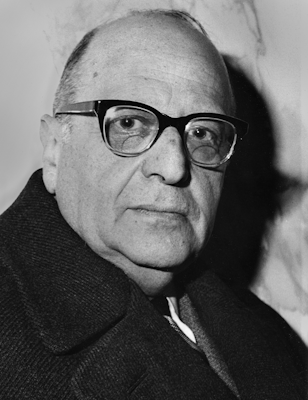
The origin of the Critical Theory was an essay by Frankfurt School director Max Horkheimer, titled “Traditional and Critical Theory,” written in 1937. It says the same crap we deal with today.
The essence of Horkheimer’s essay is that traditional theory, which is concerned with facts and figures and math and stuff, cares about understanding the world as it is without wanting to see beyond it or change it.
Therefore, the traditional theorist reproduces the society in which he works, un-Critically.
In fact, he doesn’t even realize he’s part of a historically contingent moment and just repeating and reaffirming the assumptions and class conflict of his time. (For Marxists, all of history, wrote Marx, is the history of (the evolution of) class antagonisms, so any particular moment in history is a particular set of class antagonisms based on a stage of historical development.)
Horkheimer writes,
“In this view of theory, therefore, the real social function of science is not made manifest; it speaks not of what theory means in human life, but only of what it means in the isolated sphere in which for historical reasons it comes into existence. Yet as a matter of fact the life of society is the result of all the work done in the various sectors of production. Even if therefore the division of labor in the capitalist system functions but poorly, its branches, including science, do not become for that reason self-sufficient and independent. They are particular instances of the way in which society comes to grips with nature and maintains its own inherited form.”
In short, knowing what you’re talking about is just a means of reproducing the oppressive society, so it’s not actually that good. In fact, Horkheimer says the Critical Theory is suspicious of the very idea that the society we have produces good things at all.
Further:
Horkheimer writes,
“On the contrary, [Critical Theory] is suspicious of the very categories of better, useful, appropriate, productive, and valuable, as these are understood in the present order, and refuses to take them as nonscientific presuppositions about which one can do nothing.”
For Horkheimer, there is no making anything “better, useful, appropriate, productive, or valuable” in the existing (capitalist) system because the whole thing is rotten and any improvements only make the situation worse by making people believe it is good or that it works. Dismal!
The alternative is to adopt a Critical Theory as a second and dominant dimension of theoretical thinking. This style of thinking imagines a world outside of the current system that is more concerned with living the good life than it is with getting right answers about the world or making things better inside the system.
Horkheimer writes,
“In fact, however, the self-knowledge of present-day man is not a mathematical knowledge of nature which claims to be the eternal Logos [traditional theory, strawmanned badly], but a critical theory of society as it is, a theory dominated at every turn by a concern for reasonable conditions of life.”
This is the classic socialist strawman and sad-funny-dangerous confusion: only socialism has any “concern for reasonable conditions of life.” Therefore, anything that isn’t socialism is a system that doesn’t have “concern for reasonable conditions of life.” All of socialism is this conclusion in search of arguments and damage it can do to the existing system.
My point isn’t these details, though. I’m only showing you them so you can see that they’re there from the start. My point is telling you what a Critical Theory is and always has been.
It’s the annoying claim that people who work to make the society we have better are upholding it and therefore a problem because they have decided the system we have is rotten at its very foundations and has to be replaced with socialism to be any good.
It doesn’t matter that not one society ever in the history of man has made a socialist society work, and they have produced little more than squalor, misery, struggle, and death. People just haven’t conceived of it rightly yet.
How should they conceive of it, then?
The Critical Theorists don’t tell us. In fact, Horkheimer said some 30 years later that they can’t tell us. He said that it is not possible to describe a good or ideal society on the terms of the existing society. “We lack the means,” he said in a 1969 interview. All they can do, he insisted, is bring up the negative aspects of the society we have that they wish to change.
So Critical Theory is a belief that making society better is a moral wrong because it reproduces a society they hate. They cannot offer anyone a viable alternative, though. All they can do is complain about things that don’t go perfectly until people come to hate the society they have for not being something they can’t even describe.
When people focus too much on specific policy goals, they tend to not bother with the underlying framework that’s being used, even though that framework can be of greater importance than a specific, and temporary, policy goal.