Many are familiar with the phrase “long march through the institutions”. But how does it work and where did it come from? James Lindsay discusses this and builds upon Krzysztof Szczawinski’s history of the man who is responsible for it’s naming, both of which are quoted in full below due to Twitter’s/X’s embed limitaitons.
As Lindsay explains:
This is the strategy we’re seeing playing out around us all over the place, Woke Left, Woke Right, Salafist Bolshevik (Muslim Brotherhood), and beyond.
The strategy is based in Western Marxist theory (“Cultural Marxism” and Critical Theory) and employs classic Communist entryism as a primary tactic. That means getting inside institutions and transforming them from within or collapsing them from a combination of internal and external pressure.
It is sometimes called “boring from within.” The idea is like they’re drilling a hole in the side of an institution and going in through the wall, transforming the inside, and leaving the outside apparently intact so it can keep doing its work until people finally catch on, far too late. Think about the Heritage Foundation. Or academia. Or the Bar Association. Or, or, or, or…
In one strategy it uses, it acts like a “virus,” even in its own telling. People are trained in the ideology and turned into “viral agents.” They’re then sent out into the world to join institutions, jobs, schools, movements, whatever. Their goal is to slowly turn people and then institutions and to open the door to more of themselves.
After Dutschke was shot in 1968, Herbert Marcuse, father of the New Left and Frankfurt School Critical Theory giant, took up his cause, instructing his strategy be followed in his 1972 book Counter-revolution and Revolt, naming Dutschke and the strategy (which is named after Mao’s “Long March”) and describing how to do it. The primary listed target was “education at all levels.”
That’s how it happened, and it’s still going on today, everywhere, rampantly, from all the bad guys.
And who was this Dutschke fellow?
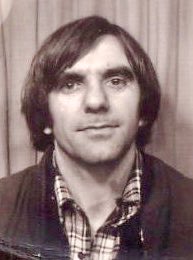
Now the Third Man – Rudi Dutschke – The Man Who Gave the Long March Its Name.
Gramsci invented the strategy. Dutschke named it – and then went out and implemented it, in the streets of West Berlin, in 1968, with a generation of students who had read Gramsci and were ready to march.
- Born in East Germany in 1940, he fled to West Berlin in 1961 – two days before the Wall went up. He had seen actually existing socialism from the inside – and concluded not that the project was wrong, but that the method was. He didn’t want that version. He wanted a better one – built from the inside of the Western institutions rather than imposed from above by a party apparatus.
- He read Gramsci. He read Mao. And he synthesized them into the phrase that named the entire project: der lange Marsch durch die Institutionen – the long march through the institutions. Not Gramsci’s phrase. Dutschke’s. Gramsci had described the mechanism. Dutschke gave it the slogan that made it actionable, transmissible, and operational for an entire generation. The phrase spread across Europe in 1968 like a match dropped in dry grass. Every student who heard it understood immediately what it meant and what it required.
- The target was precisely identified: not the state, not the economy, but the institutions that reproduced the cultural hegemony – the universities, the media, the schools, the churches, the legal system. Infiltrate them. Occupy them from within. Replace the people who ran them with people who shared the counter-hegemonic project. Don’t storm the Reichstag. Get a job in the editorial office. Get a position in the faculty. Get appointed to the curriculum committee. The revolution would happen through tenure, not through barricades.
- On April 11, 1968, Josef Bachmann shot Dutschke in the head on the Kurfürstendamm in West Berlin. Three bullets. Dutschke survived – but never fully recovered. He spent the rest of his life in partial recovery, moving between Germany, Denmark, and Britain, still writing, still thinking, still speaking at conferences with the damaged brain of a man who had been shot for his ideas. He died in 1979, drowning in his bathtub during an epileptic seizure caused by the brain damage from the shooting. He was thirty-nine.
- The shooting produced something Bachmann had not intended: it made Dutschke a martyr and the movement a cause. The protests that followed — directed primarily at the Axel Springer media company, whose tabloid Bild the students blamed for inciting violence — were the largest street demonstrations in West Germany since the war. The attempt to silence the long march accelerated it. The generation radicalized by the shooting went on to become exactly what Dutschke had described: the professors, the journalists, the civil servants, the judges. The bullet proved his point.
- Gramsci designed the theory in a prison in Italy. Dutschke gave it its name and its generation in Berlin. The 1968 student movement he led was the transmission mechanism – the moment the Prison Notebooks left the academy and became a political program with a slogan, a street presence, and a generational identity. Without Dutschke, Gramsci remains a text. With Dutschke, he becomes a movement. The long march through the institutions began, as a practical matter, in West Berlin in 1968, among students who knew precisely where they were going and had a name for the route.
- The institutions they marched through are now theirs. The universities, the media, the civil service, the judiciary – all transformed, over fifty years, exactly as Dutschke described. He was shot for saying it could be done. It was done. The man who named the march did not live to see its completion. He died at thirty-nine in a bathtub, from the damage done by a bullet fired by someone who thought killing him would stop the march. It did not stop the march. It never does. Ideas shot in the head have a way of surviving their authors.
Even the bad ones.
And if you need a reminder of how far Communists in West Germany went, you can find out here… if you have the stomach for it.