John Rawls is a name that few Americans are familiar with, let alone a name many, if not most, conservative are unfamiliar with. Yet his major works, “A Theory of Justice” and “Political Liberalism” have served as the lens through which Americans increasingly view society and the notion of “justice”, much to our detriment. To whit, Rawl’s has contributed to:
“Many Americans think of themselves primarily in terms of the groups with which they identify. Some turn to a theoretical ‘consensus’ rather than the Constitution to determine the government’s power. Others refrain from referencing religion in the public square. Most turn to the Supreme Court of the United States as our political guide.”
Professor Jerome C. Foss, from the Saint Vincent College, presents an excellent summary and analysis of Rawls and the damage that he has helped cause. His work is worth reading in full. However, if the reader would be so kind, your humble author would like to soliloquize, so as to speak, on Rawls’ main four positions (the original position; the overlapping consensus; public reason; general theory of constitutional interpretation) as summarized in Prof. Foss’ writing, and offer a separate commentary in addition to Prof. Foss’.
The 1st of Rawls’ tenants: “The Original Position”.
Society—it’s customs, more, and folkways—should not and can not be based on abstractions, especially those of a “higher order”. Society must be consistent with reality, and with human nature. Rawls outright wished to reject mankind as having any type of essence and would rather “nullify the effects of specific contingencies which put men at odds and tempt them to exploit social and natural circumstances to their own advantage” by pushing a pre-determined “correct” way of thinking about society upon the tabula rasa or mankind.
Rather than allow for natural rights such as life, liberty, property, Rawls proposes to treat people as nothing more than interest groups with pre-defined interests. With this assumption, he tries to lead people by the bull’s ring to the “correct” arrangement through the “Veil of Ignorance”.
Stated simply, the “Veil of Ignorance” is one where one is free to create an original position—that is, play “intelligent designer”—by constructing a social scheme without knowing which interest group or division of mankind one will belong to in this brave new world. As such, this suggests that one would support, for example, same-sex marriage and the abolition of the notions of biological sex and the “gender binary” because one might be born a queer genderfluid individual.
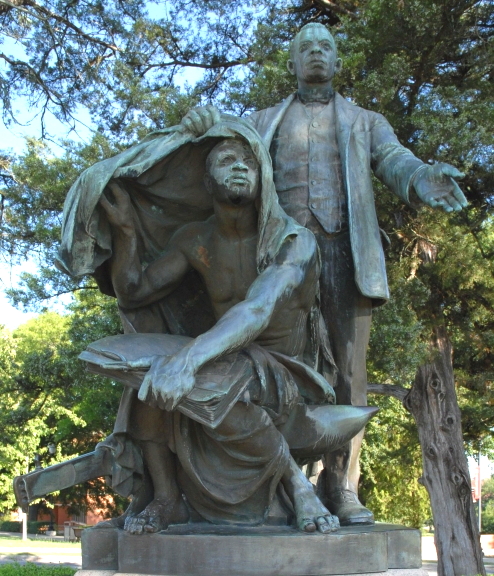
Lifting the Veil of Ignorance
Rawls boils down the principles that would allegedly arise as everyone having the same basic liberties and no inequality unless absolute equality of opportunity exists while the less advantaged benefit the most.
Let us examine these assumptions. As for having the same basic liberties seems all well and good, but this just means a sameness that could be fulfilled by a lack of liberty; indeed, the later is necessary for his scheme to work, as we will later see.. For example, the right to think correctly and say only socially just things would satisfy this first point, despite this resulting in some getting their way and forcing it on others, while the others are punished.
The second point assumes that equality in effect is a requirement for justice; it is not. In reality, there will always be hierarchies—save for perhaps a small primitive tribe constrained by common superstition and customs—and those hierarchies will always result in a “fair shot” as success being impossible. This is only unjust if power is totalitarian in nature, and the power that is has no checks, but rather just the result of the will of the powerful. That differences are somehow unjust just because they don’t rise up the very dregs of society is assumptive and nonsensical.
A moral structure where the poor and needy are helped out to provide some minimum level of existence could very well be considered just, and necessary in a good and moral society. But to preclude any differences—an impossible task—unless it meets this criteria does not and ought not be a requisite for a “just” original position.
Indeed, a society where there is some difference in liberty is preferable to one where everyone equally has a lack of liberty. Much how they would rather “the poor be poorer, provided the rich were less rich”, this worldview would require a flattening of society such that everyone is worse off, even though people are relatively less worse off than others.
As such, “equality” is not, strictly speaking, a question of justice per se. As James FitzJames Stephens notes:
“The general constitution of things, by which some people are better off than others, and some very badly off in all respects, in neither just nor unjust, right nor wrong. It simply is. It affects the question of benevolence, not the question of justice, of its author.”
Thus, in order to achieve this “justice as fairness”, Rawls wishes to ignore human differences and human nature in order to create a utopia ex nihilo in vacuo.
Rawls’ 2nd tenant: “The Overlapping Consensus”.
According to Rawls, one is free to come up with any justification one can rhetorically twist, hew, and haw to support the acceptable and pre-determined “justice as fairness” position, just as long as the correct answer is arrived at. The destination is the same, so the exact route thereto is irrelevant. Thus one is free to justify the mandated position of “justice as fairness” as Rawls intends to lead us to.
This is the basis for something that emanates from the Left quite often: Starting with the pre-determined answer, and then making up what ever arguments you want to reach one’s “Q.E.D.” One can most clearly see this in “Critical Theory”, whereby one criticizes an aspect of the designated boogie-man (most often Western Civilization) by presuming that it is evil, and then coming up with excuses to justify the destruction—or deconstruction, if you will—of the axiomatically evil pre-designated boogie-man. Not that the proponents are so honest to admit as much, assuming they even grok that that is the case.
So, in addition to a pre-determined idea of “justice as fairness”, the bulwark of “consensus” is added to justify this inexorable world view.
Rawls’ 3rd tenant: “Public Reason”.
In addition to a pre-conceived notion of “justice and fairness” supported by consensus by whatever means and excuse necessary, a public reason is used as justification provided that it is consistent with the pre-determined axiomatic consensus. Thus, the will of the people is valid and just, provided the will of the people is the correct ones.
This explains the seeming contraction of the Leftist thought that declares that democracy and the will of the people are paramount, while dismissing democratic decisions decided by the people that conflict with the desired outcome.
Only the reasonable people can participate and have their voices legitimately heard. In effect, only the New Soviet Man represents the just and permissible “consensus” and “reason”; as a corollary, those who espouse incorrect thinking are rejected as “wreckers” or trouble-makers who upset the “consensus”, being essentially the Kulaks and/or Mensheviks to Rawl’s Bolshevism.
It is easy, then, to reach the correct consensus when only the arguments that will lead to that consensus are deemed legitimate and allowed to be voiced. As Prof. Foss notes:
“In practice, public reason seems to ensure liberal outcomes by disqualifying any counterarguments.”
Rawls’ 4th tenant: “Courts of Constitutional Interpretation”.
By and large, the previous three tenants lay the groundwork for the fourth, and to the most palpable results that affect us.
In effect, the courts should be bound by the “public reason” of the “overlapping consensus” of the “original position” that hypothetically would happen that enshrines “justice as fairness”.
The courts should uphold “democracy” and the “will of the people” when it is considered “correct”, and rule thereagainst when it is not. Precedent and the Common Law will be cited if they can be excused into supporting the desired result; precedent and the Common Law will be rejected when they are antagonistic to the desired result, all in the name of the “public reason” of the “overlapping consensus”.
Sadly, this cerebral onanism tends to push fantasies of unintelligent designers who muse about impossible utopias they design ex niliho and en vacuo from reality itself.
Continue reading →