Texas’ age verification laws for naughty sites are now being legally applies to not just Texas, but to the entire world.
“In Travis County, Texas, a judge has frozen motherless.com, the .com domain of a foreign pornography operator, taking it down worldwide until it posts a $9.14 million bond and builds an age verification digital ID system to the state’s own specification.
“Kick Online Entertainment is a foreign corporation, and the order admits so, which is the reason the writ went somewhere else. A state court cannot summon a company overseas, but it can order the American firm that keeps the registry of every .com name, and that registry is what makes a domain resolve at all.
“…
“ A company outside the state’s reach is being made to both pay and obey a Texas statute before its property comes back. This is specific performance of a state law, pulled from a foreign operator by holding an asset hostage at the registry.”
But that’s just one naughty content company, and certainly is limited in scope, right?
Nope!
“The order then pre-authorizes more of the same, closing with the line that ‘as many writs as the State deems necessary shall issue,’ so the count of future seizures is set by the attorney general and not by a judge weighing each one. And Texas was excused from the security these writs normally demand, because the order says “the State of Texas is not required to post a bond prior to the issuance of the Writ of Attachment.”
“The party taking the asset posts nothing. The party losing it posts $9.14 million.
“A domain lock has no borders. The law reaches only Texas users, yet locking a .com pulls the site down for everyone on earth, including people in countries that never passed such a law, had no say in it and don’t see why they have to have Texas law affect their lives. A state remedy has been given global effect only because the registry that happens to hold the record is American.”
Any other state, including deep Blue states run by Leftists, can pull a similar stunt and yoink the domain for any site that they end up requiring use age verification requirements. Such requirements are not necessarily limited to þe olde “pr0nz” as the Supreme Court made clear that going through age verification to access legal material isn’t an imposition on the 1st Amendment.
But the consequences go far beyond mere website content. With the drive to impose age verification on any social media, and you have a way for one state to eliminate anonymous speech online. Worse, the age verification being applied to operating systems and even “providing it” could make it impossible to download non-approved programs and operating systems.
The only way to get around this is to get a domain owned by a foreign company or country, for which 1st Amendment freedoms are distinctly lacking.
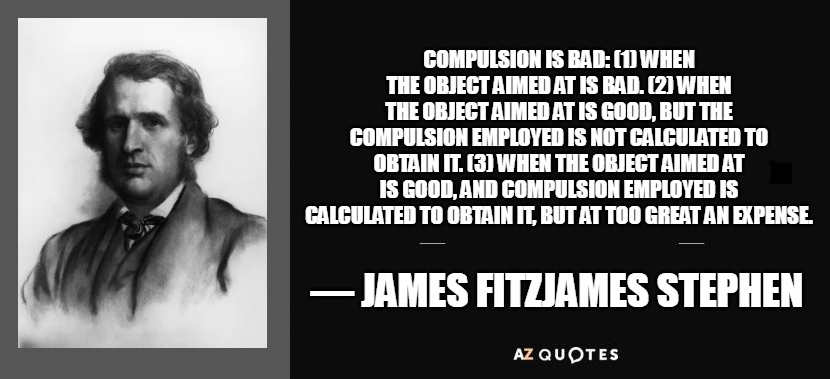
Online privacy is dead for everyone all “for the children”. James FitzJames Stephen noted that such compulsion, even if the aim is good and the methods actually achieves that aim, is wrong when the cost of achieving it becomes too high.