
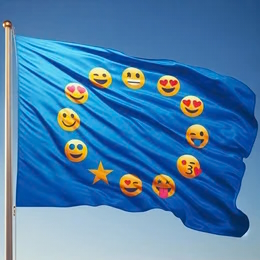
The European Union has declared war on emojis, or at least their illegal use. Purportedly, this is aimed at people using emojis to signal illegal content or used in furtherance of illegal activities… which in the E.U. includes “hate speech”. A report for the Digital Services Act “identifies systemic risks such as, among others, the spread of illegal content or threats to fundamental rights”.
“Key findings cover risks to mental health and to the protection of minors online; the impact of emerging technologies, such as generative AI, on online platforms; and challenges to intellectual property protection on online marketplaces. Among the notable mitigation measures highlighted are, for example, the use of automated systems to detect emojis used as code for illegal activities online, such as the sale of illegal drugs.”
And yes, this report “also links emoji use to hate speech, citing a claim by Facebook and Instagram-owner Meta that they can be used to cloak so-called ‘hate speech’ from digital censors.”
On “hate speech” the report states:
“Illegal hate speech and the incitement of hate crimes. Providers, in particular of social media platforms and search engines, and CSOs identified different systemic risks related to the dissemination of illegal hate speech and the incitement of hate crimes. This report, and the DSA, rely on definitions of illegal hate speech from applicable Union and national laws, because the DSA itself does not define illegality. Within the Union legal framework, illegal hate speech primarily refers to speech targeting individuals or groups based on protected characteristics as set out in the Council Framework Decision 2008/913/JHA10, namely race, colour, religion, descent, or national or ethnic origin. Some providers highlighted that this type of illegal content may lead to the dehumanisation, exclusion, segregation or vilification of individuals or groups, and may further lead to the promotion of violence against people that are categorised by others on the basis of specific characteristics. Providers are free to use additional elements in their own terms and conditions and policies in a way which may extend beyond the scope of illegal hate speech as defined by Union and Member States laws. For example, many providers have also defined as hate speech content which claims that individuals or groups with certain attributes/characteristics (i.e. age, sexual orientation and gender identity, or disability) are inferior or comparable to criminals, animals, or objects.”
Aside from using A.I. to find doubleplusungood “hate” emojis, the report recommends restricting online interfaces, content moderation, “account verification”, and other nanny state “solutions”.
The full report can be read here, or below:
First report of the European Board for Digital Services in cooperation with the Commission pursuant to Arti… by ThePoliticalHat




Pingback: In The Mailbox: 04.29.26 (Evening Edition) : The Other McCain